|
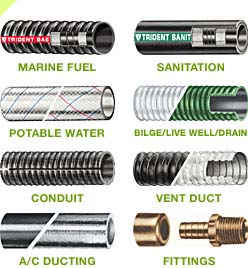
Marine Hose Marine Hose is a vital part of your vessel. It's used in lieu of pipe because it is flexible and it provides better and easier installations, especially where tight spaces, movement and vibration are a factor (typical in most boats). As plumbing they deliver, circulate and discharge the fluids (liquid and gasses) for most operating systems (engine, generator, exhaust, bilge, drainage, live well, sanitation, potable and gray water, ventilation, gas appliance, climate control, etc.) and they are often connected as an extension of a hole in your boat (above and below the water line).
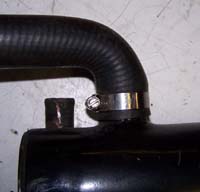
All hoses must be inspected during the survey. Hoses become brittle and fatigued with use and the passing of time. They are often exposed to extremes, high temperature, low temperature, excess flexing or vibration, and are often ignored during routine maintenance. Over tightening of clamping devices is a major cause of hose failure. It is unusual to find an engine on any vessel where the hoses have not been stressed from over tightening. This situation can be readily observed when the clamp appears to be impressed into the hose. Hose Clamps There are many different clamps used in the marine environment, and most are well suited for their intended purpose. From time to time you will come across an after market installation of a device which is inappropriate. Some stainless clamps have a short life span in the marine environment because they are made of poor quality stainless. Very often we find stainless clamps where the strap is in good shape, but screw part has rusted away rendering the clamp useless. In many applications the hose is the wrong size and stretching the hose to fit or clamping a very loose fitting hose to secure it will not work. A proper fit is when the inside dimension of the hose matches the outside dimension of the fitting., then very little clamp pressure is needed. Double clamping. The ABYC and tradition suggest the double clamping of all hoses which are connected to overboard devices below the water line. This is a standard practice. If one clamp should fail the second will act as a backup and prevent the hose from parting from the fitting. The engines cooling system and exhaust system should also be double clamped as these are areas of extreme stress and vibration and one clamp will not do the job. This hose is secured with the proper tension. Note the hose is not crushed or distended.
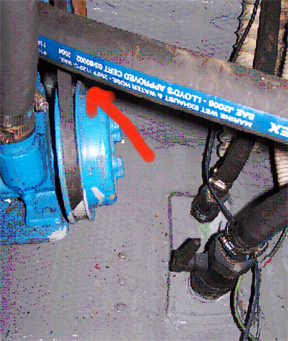
This hose is improperly secured and routed as it is being chaffed by the V belt.
|